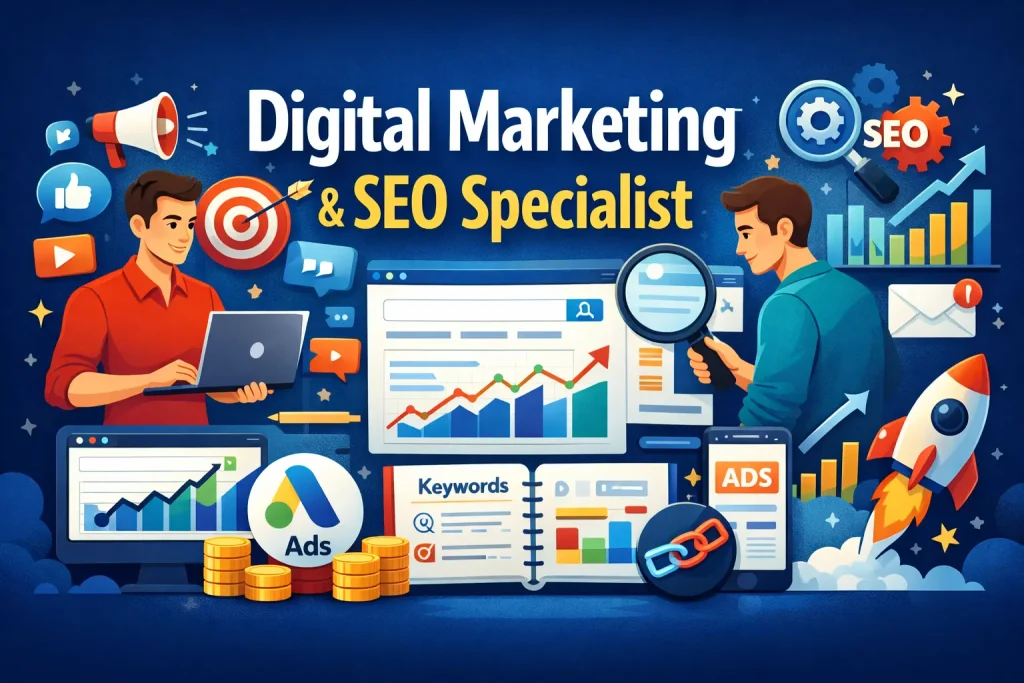
Digital marketing is no longer optional — it’s essential. Whether you’re a start-up or a global enterprise, digital marketing offers the tools to connect with customers, build brand awareness, and drive growth in a competitive marketplace.
This guide breaks down everything you need to know about digital marketing: its core principles, types, and how to implement strategies that deliver results.
What is Digital Marketing?
Digital marketing is the process of promoting products, services, or brands using digital channels such as search engines, websites, social media platforms, email, and mobile applications. It has transformed how businesses connect with their audience by allowing precise targeting, measurable results, and real-time optimization. Unlike traditional marketing, which relies on physical mediums like print or television, digital marketing operates in an environment where user behavior can be tracked, analyzed, and improved continuously.
At its core, digital marketing is not just about being online. It is about using the right channels, delivering the right message, and reaching the right audience at the right time. Businesses that misunderstand this often waste money on random tactics without a strategy. If your approach is scattered, your results will be too.
Evolution of Digital Marketing
Digital marketing did not appear overnight. It evolved alongside the internet. In the early days, businesses relied on basic websites and email campaigns. As search engines developed, search engine optimization became essential. Then came social media platforms, which shifted the focus from one way communication to engagement and interaction.
Today, digital marketing is data-driven. Every click, impression, and conversion can be tracked. This level of insight forces marketers to be accountable. If a campaign fails, the data will expose it. There is no room for guesswork anymore.
The Importance of Digital Marketing
Ignoring digital marketing in today’s environment is a strategic mistake. Consumers spend a significant portion of their time online, researching products, reading reviews, and comparing options before making decisions. If your business is not visible during this process, you are effectively invisible.
Digital marketing offers scalability. A small business can compete with larger brands if it uses the right strategy. It also provides cost efficiency. Instead of spending blindly, you can allocate budgets based on performance metrics.
Another critical advantage is targeting. Traditional marketing reaches a broad audience, most of whom are not interested. Digital marketing allows segmentation based on demographics, behavior, interests, and intent. This precision is what drives higher conversion rates.
Types of Digital Marketing
Digital marketing is not a single tactic. It is a system of interconnected channels. Treating them as isolated elements is one of the most common mistakes.
1. Search Engine Optimization (SEO)
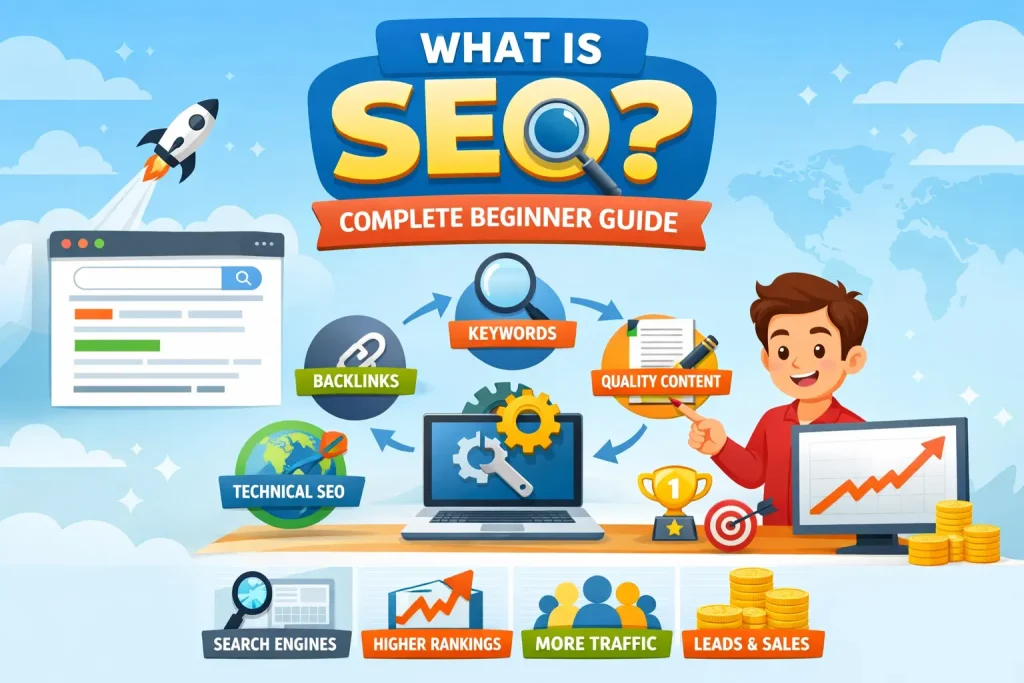
Search engine optimization is the process of improving a website’s visibility in organic search results. When users search for information, products, or services, they typically click on the top results. If your website does not rank, it will not receive traffic.
SEO involves keyword research, on-page optimization, technical improvements, and link building. It is a long term strategy, not a quick fix. Anyone promising instant rankings is either inexperienced or dishonest.
2. Search Engine marketing (SEM)
Search engine marketing is similar to SEO in that it aims to increase the number of internet users who come across a piece of content when using a search engine. However, unlike SEO it is a form of paid advertising. Google Ads, which allows organizations to buy search results based on keywords and displays them at the top of a page in a designated advertising module, is a prominent example of SEM.
3. Content Marketing
Content marketing focuses on creating valuable and relevant content to attract and engage an audience. This includes blog posts, articles, videos, infographics, and more. The goal is not just to sell but to educate and build trust.
Poor content will not perform, regardless of how much you promote it. If your content does not solve a problem or answer a question, it is useless. Quality is non-negotiable.
4. Social Media Marketing (SMM)
Social media marketing involves using platforms like Facebook, Instagram, LinkedIn, and Twitter to connect with audiences. It is not just about posting regularly. It is about creating meaningful engagement and building a community.
Many businesses fail here because they focus on vanity metrics like likes and followers instead of conversions and revenue. Popularity does not equal profitability.
5. Website Marketing
Companies often use their own website as the centerpiece of their digital marketing activities. The most effective websites represent the brand and its products and services in a clear and memorable way.
6. Pay-Per-Click Advertising (PPC)
PPC is a model where advertisers pay each time a user clicks on their ad. Platforms like Google Ads and social media networks offer PPC campaigns. This method provides immediate visibility but requires careful management.
If your targeting or ad copy is weak, you will burn money quickly. PPC demands constant testing and optimization.
7. Email Marketing
Email marketing remains one of the most effective digital marketing channels. It allows direct communication with an audience that has already shown interest in your business.
However, irrelevant or excessive emails will lead to unsubscribes. Personalization and value-driven messaging are essential.
8. Mobile marketing
Mobile marketing is tailored to mobile devices and mobile users. It engages your target audience on mobile devices, like smartphones and tablets, as well as wearables like smartwatches.
With mobile marketing, businesses often reach out to subscribers via SMS messaging. Since most of us have our phones on us 24/7 no matter where we are, mobile marketing makes it possible for businesses to send timely messages.
9. Affiliate and Influencer Marketing
Affiliate marketing involves partnering with individuals or businesses that promote your products in exchange for a commission. Influencer marketing leverages individuals with large followings to promote brands.
This strategy works only when the audience trusts the promoter. Forced or inauthentic promotions can damage credibility.
10. Video Marketing
A lot of internet users turn to sites like YouTube before making a buying decision, to learn how to do something, to read a review, or just to relax. Marketers can use any of several video marketing platforms, including Facebook Videos and Instagram, to run a video marketing campaign. Companies find the most success with video by integrating it with SEO, content marketing, and broader social media marketing campaigns.
Inbound vs Outbound in Digital Marketing
Inbound and outbound marketing are important parts of your marketing strategy. It can be beneficial to do both to drive brand awareness and engage prospects.
Outbound marketing is about pushing information out to a prospect through marketing activities such as events, TV commercials, and cold calling.
In contrast, inbound marketing is about pulling people in, drawing them to your website through activities such as social media posts, display ads, and blogs.
How Digital Marketing Works
Digital marketing operates on a simple principle: attract, engage, and convert. First, you attract users through channels like search engines or social media. Then, you engage them with valuable content or offers. Finally, you convert them into customers.
The process does not end with conversion. Retention and loyalty are equally important. Acquiring a new customer is often more expensive than retaining an existing one.
Data plays a central role in this process. Analytics tools track user behavior, campaign performance, and return on investment. Without data, you are operating blindly.
Digital Marketing Strategy
A digital marketing strategy is not a collection of random tactics. It is a structured plan aligned with business goals.
The first step is defining clear objectives. Whether it is increasing website traffic, generating leads, or boosting sales, your goals must be specific and measurable.
Next, you need to understand your target audience. Generic assumptions will lead to ineffective campaigns. You must identify their needs, preferences, and behavior.
Channel selection is another critical step. Not every platform is suitable for every business. Choosing the wrong channels wastes time and resources.
Content planning follows. You need a consistent flow of high-quality content tailored to your audience. Random posting will not deliver results.
Finally, you must track performance and optimize continuously. Digital marketing is not static. What works today may not work tomorrow.

Key Performance Indicators (KPIs) in Digital Marketing
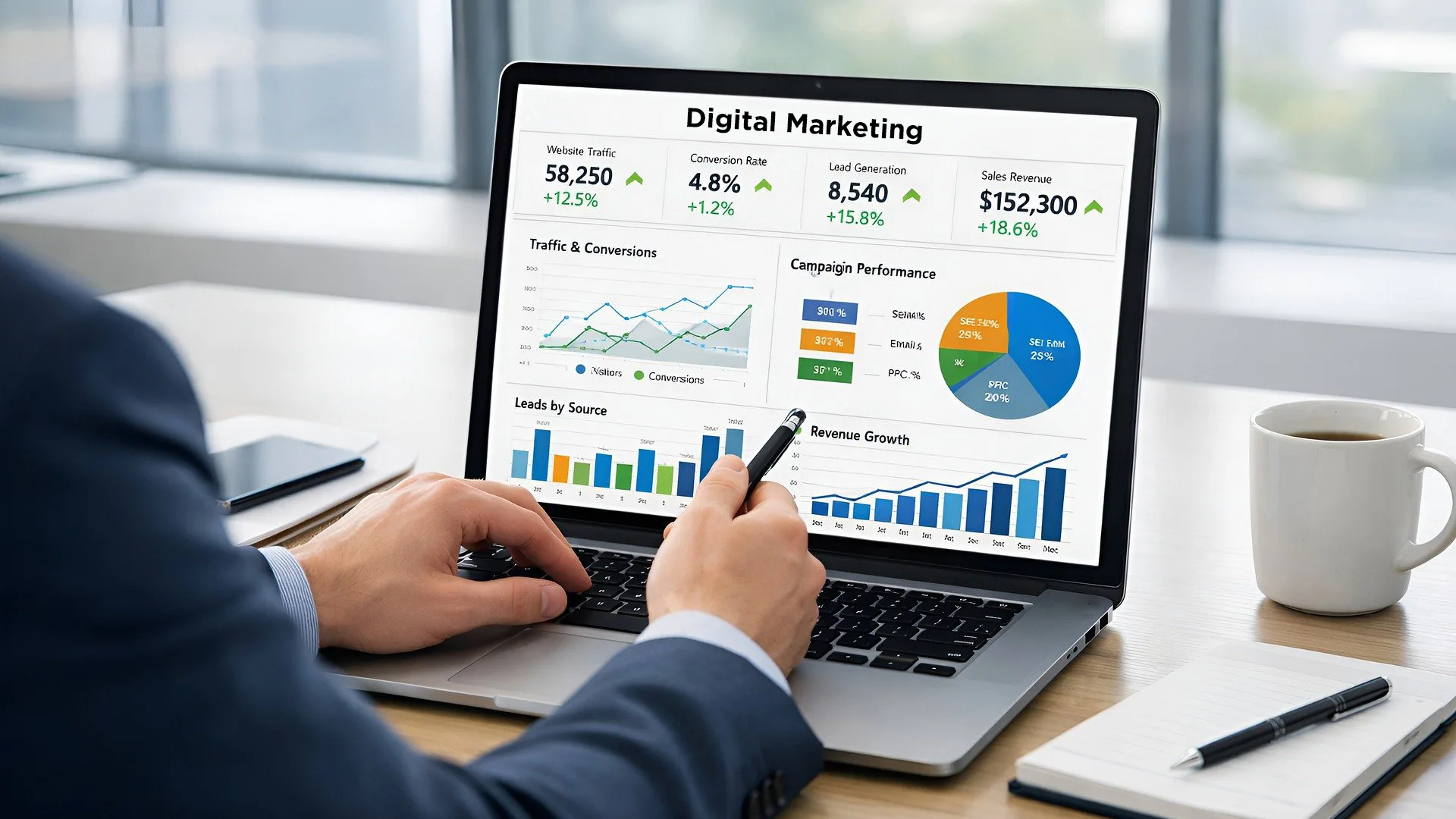
- Key Performance Indicators (KPIs) in digital marketing are measurable values used to evaluate how effectively a campaign or strategy is achieving its objectives. They provide clear direction by linking marketing activities to business goals such as traffic growth, lead generation, or revenue.
- Traffic-related KPIs measure how many users visit a website and where they come from. Metrics like organic traffic, referral traffic, and direct visits help assess the effectiveness of channels like SEO and social media.
- Engagement KPIs focus on user behavior once they land on your platform. Metrics such as bounce rate, average session duration, and pages per session indicate whether your content is relevant and engaging.
- Conversion KPIs track the actions users take, such as form submissions, purchases, or sign-ups. Conversion rate and cost per conversion are critical for evaluating campaign performance and return on investment.
- Revenue-based KPIs measure the financial impact of digital marketing efforts. Metrics like customer acquisition cost, lifetime value, and return on ad spend determine overall profitability and sustainability.
Tools for Digital Marketing
Digital marketing relies heavily on tools for execution and analysis. Tools like Google Analytics provide insights into website performance. SEO tools help with keyword research and site audits. Social media management tools streamline content scheduling and engagement.
However, tools are only as effective as the person using them. Buying expensive software without understanding strategy is pointless.
What Skills Are Needed in Digital Marketing?
Digital marketers typically rely on strong communication skills, familiarity with social media and online advertising platforms, and the ability to analyze performance data. Because digital campaigns can be measured in real time, marketers must be comfortable using analytics tools to evaluate and refine their strategies.
Common Mistakes in Digital Marketing
One of the biggest mistakes is focusing on tactics without a strategy. Many businesses jump into social media or paid ads without understanding their audience or goals.
Another mistake is expecting instant results. Digital marketing requires time and consistency. Short-term thinking leads to poor decisions.
Ignoring data is also a critical error. If you are not analyzing performance, you cannot improve. Decisions based on assumptions rather than data will fail.
Over-automation is another issue. While automation can improve efficiency, excessive reliance on it can make your marketing feel impersonal.
The Future of Digital Marketing
Digital marketing is constantly evolving. Artificial intelligence, voice search, and automation are shaping the future. Personalization will become even more important as users expect tailored experiences.
Privacy regulations are also changing how data is collected and used. Marketers must adapt to these changes while maintaining transparency and trust.
Despite these advancements, the fundamentals remain the same. Understanding your audience and delivering value will always be the foundation of effective marketing.
Conclusion
Digital marketing is not optional anymore. It is a fundamental part of modern business strategy. However, success requires more than just being present online. It demands a clear strategy, consistent execution, and continuous optimization.
If you approach digital marketing casually, you will get average results at best. If you treat it as a structured, data-driven system, it can become a powerful growth engine. The difference lies in how seriously you take it.
Frequently Asked Questions (FAQs)
- What is digital marketing?
Digital marketing is the promotion of products or services using online channels like search engines, social media, and websites. - Why is digital marketing important?
It helps businesses reach a larger audience, target specific users, and measure results accurately. - What are the main types of digital marketing?
Key types include SEO, social media marketing, content marketing, email marketing, and paid advertising. - How long does digital marketing take to show results?
It depends on the strategy; SEO takes time, while paid ads can deliver faster results. - Is digital marketing suitable for small businesses?
Yes, it allows small businesses to compete with larger brands through targeted and cost-effective strategies.