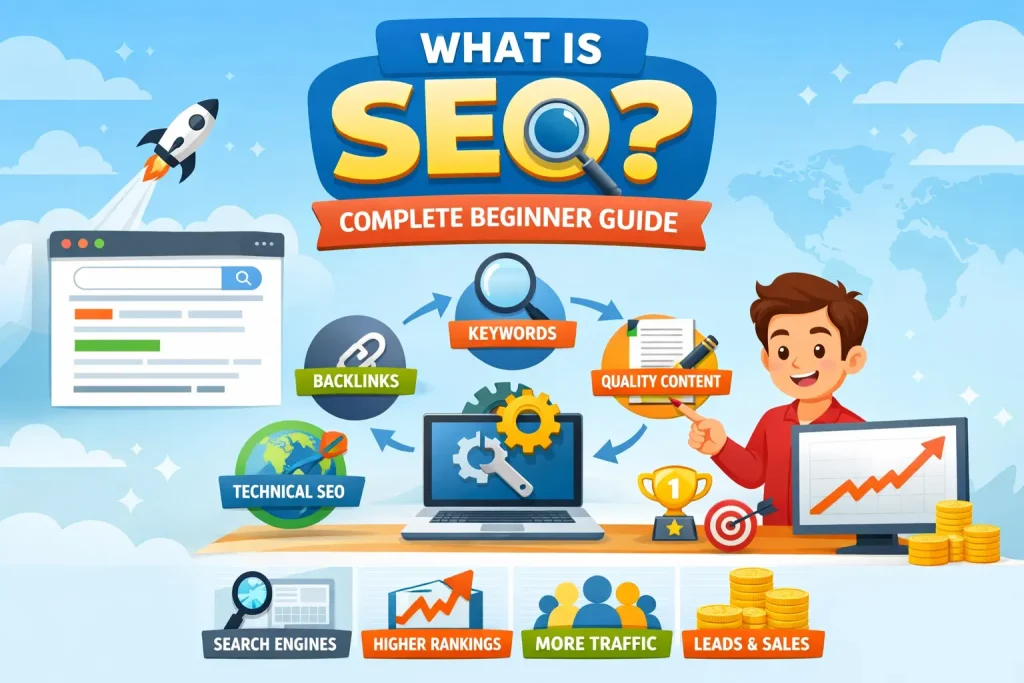
In today’s competitive digital landscape, businesses are constantly searching for effective ways to increase online visibility, generate leads, and improve revenue. SEO vs PPC – the two most powerful digital marketing strategies used for most business purposes. Search Engine Optimization (SEO) and Pay-Per-Click Advertising (PPC) both strategies focus on driving traffic from search engines, but they operate in completely different ways.
Many businesses struggle to decide whether they should invest in SEO, PPC, or both. The reality is that there is no universal answer because the right choice depends on business goals, competition, budget, industry, and long-term marketing strategy. Understanding the strengths, limitations, and practical applications of both methods is essential for making smart marketing decisions.
As someone who has developed knowledge in digital marketing and SEO, I understand that businesses must focus not only on traffic generation but also on conversion quality, brand authority, customer trust, and return on investment. This article explains the differences between SEO and PPC, how they work, their advantages and disadvantages, and which strategy performs better under different business situations.
Understanding SEO
Search Engine Optimization is the process of improving a website’s visibility in organic search engine results. SEO focuses on optimizing website structure, content quality, technical performance, and authority signals so that search engines like Google can rank pages higher for relevant search queries.
The main objective of SEO is to attract unpaid traffic from search engines through relevant keywords and high-quality content. Unlike paid advertising, SEO does not require businesses to pay for each visitor who clicks on the website.
SEO can be divided into three major categories.
On-page SEO focuses on optimizing website content, headings, keywords, internal linking, metadata, and user experience. Technical SEO improves website speed, mobile responsiveness, crawlability, indexing, and site architecture. Off-page SEO involves backlink building, digital PR, and authority development to improve domain trust.
SEO is considered a long-term digital marketing strategy because results usually take time to appear. However, once rankings improve, businesses can generate consistent traffic without continuously paying for every click.
Understanding PPC
Pay-Per-Click advertising is a paid digital marketing model where advertisers pay search engines whenever users click on their ads. The most popular PPC platform is Google Ads, where businesses bid on keywords to display advertisements at the top of search engine results pages.
PPC allows businesses to instantly appear in front of potential customers searching for related products or services. Advertisers create campaigns, select target keywords, define audience targeting, set budgets, and write ad copy to attract clicks and conversions.
Unlike SEO, PPC provides immediate visibility. Businesses can launch campaigns and start generating traffic within hours. This makes PPC highly valuable for product launches, seasonal promotions, local campaigns, and lead generation.
However, PPC traffic stops the moment advertising budgets are paused. Businesses must continuously invest money to maintain visibility and traffic flow.
The Core Difference Between SEO and PPC
Although both SEO and PPC aim to increase website traffic from search engines, their approach is fundamentally different.
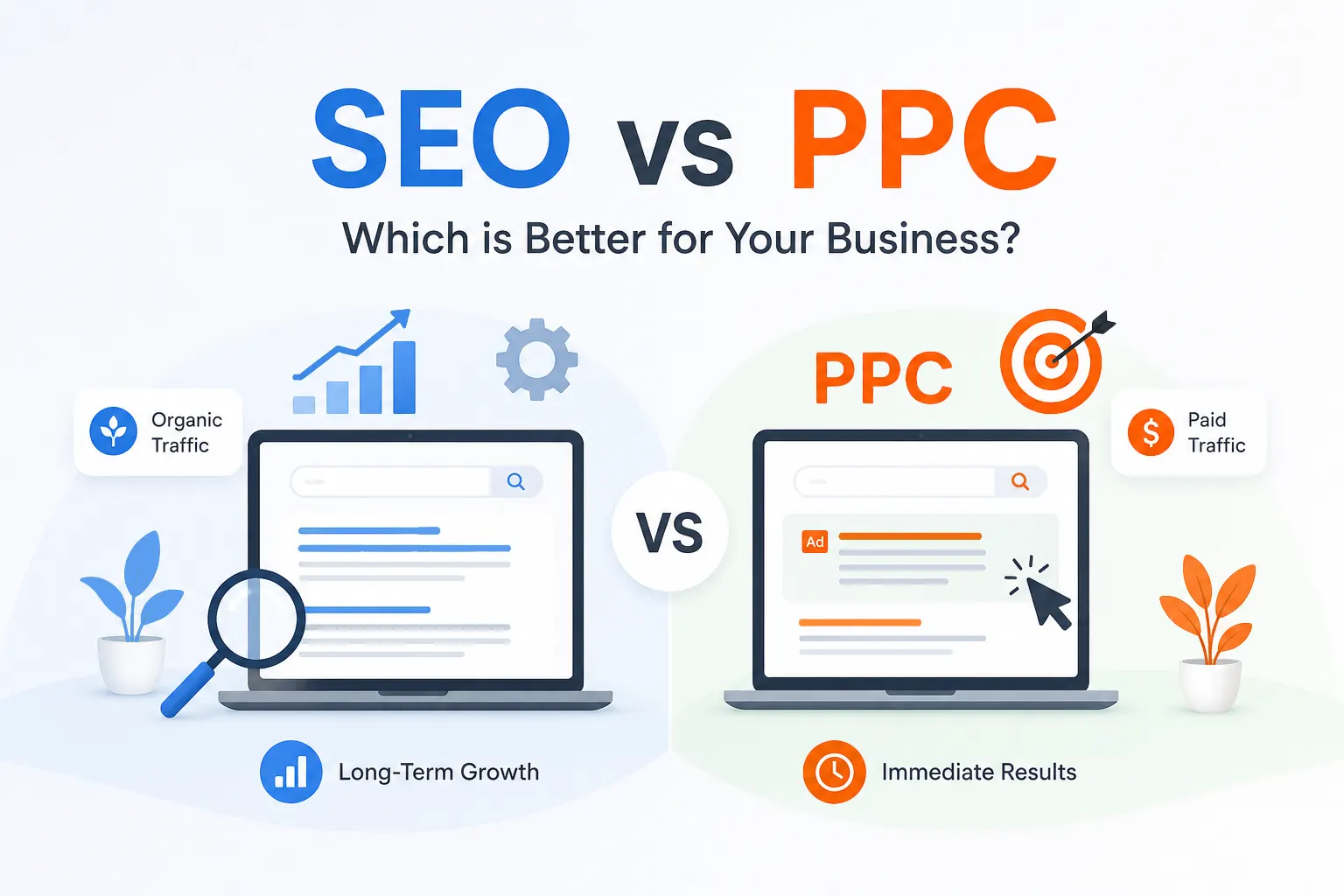
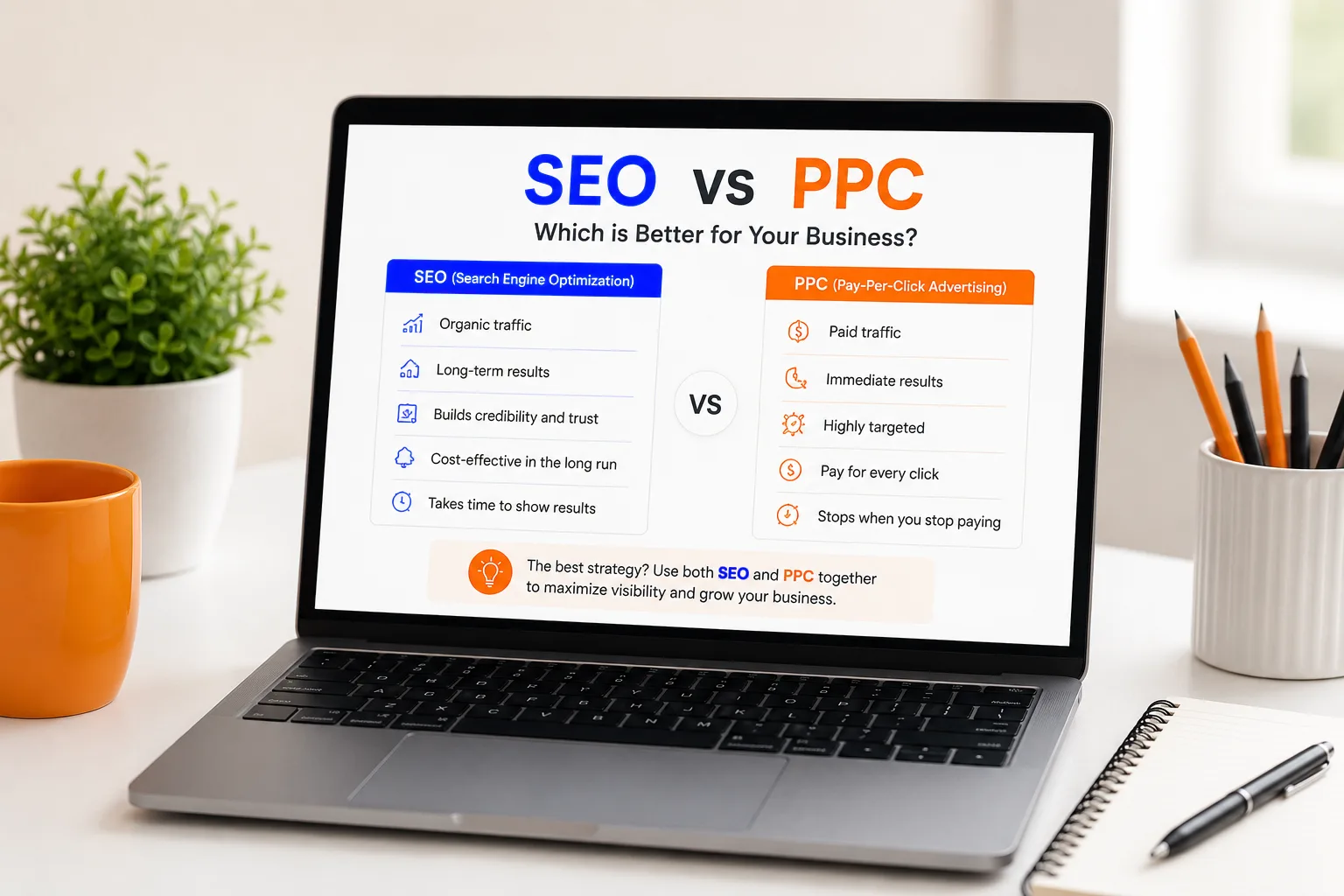
SEO focuses on earning organic rankings naturally through optimization and authority building. PPC focuses on buying visibility through paid advertisements.
SEO takes time to produce results but offers long-term sustainability. PPC delivers immediate traffic but requires continuous investment.
SEO builds trust because users often perceive organic results as more credible. PPC offers faster conversions because ads target high-intent search queries directly.
The decision between SEO and PPC should not be based only on speed or cost. Businesses must evaluate customer behavior, competition level, marketing objectives, and profitability.
Advantages of SEO
One of the biggest strengths of SEO is long-term traffic generation. Once a website achieves strong rankings, it can continue attracting visitors consistently without paying for every click. This improves long-term marketing efficiency and lowers customer acquisition costs over time.
SEO also helps build brand authority. Websites ranking organically on the first page of search engines are often viewed as trustworthy and reliable by users. High-quality content, optimized user experience, and authoritative backlinks improve credibility in competitive markets.
Another major advantage is higher long-term ROI. Although SEO requires time and effort, successful rankings can generate traffic and leads for months or even years.
SEO also supports overall website quality improvement. Technical optimization, mobile responsiveness, content structure, and user experience enhancements contribute to better engagement and conversion performance.
In addition, SEO traffic often has strong user intent because visitors are actively searching for solutions, products, or information related to the business.
Disadvantages of SEO
Despite its advantages, SEO also has limitations. The biggest challenge is time. SEO is not a quick-growth strategy. Depending on competition level and industry, it may take several months before rankings improve significantly.
SEO is also highly competitive. Popular keywords often require extensive content optimization, high-authority backlinks, and strong domain trust to compete against established websites.
Another issue is algorithm dependency. Search engines frequently update ranking algorithms, which can impact website visibility unexpectedly. Businesses relying entirely on SEO may experience traffic fluctuations during major algorithm changes.
SEO also requires continuous optimization. Content updates, technical maintenance, backlink monitoring, and competitor analysis are necessary to maintain rankings.
Advantages of PPC
The strongest advantage of PPC is speed. Businesses can immediately appear at the top of search engine results and generate targeted traffic quickly. This is especially useful for new websites that do not yet have strong SEO authority.
PPC also provides precise audience targeting. Advertisers can target users based on location, demographics, devices, interests, and search behavior. This level of targeting improves campaign efficiency and conversion potential.
Another major benefit is measurable performance tracking. PPC campaigns provide detailed analytics including impressions, click-through rates, conversion rates, cost-per-click, and return on ad spend. Businesses can optimize campaigns using real-time performance data.
PPC is also effective for testing marketing strategies. Businesses can test landing pages, keywords, headlines, and offers quickly before investing in long-term SEO campaigns.
For highly competitive industries where organic rankings are difficult to achieve, PPC can provide immediate market access.
Disadvantages of PPC
The biggest disadvantage of PPC is cost. Competitive keywords can become extremely expensive, especially in industries like finance, healthcare, insurance, and legal services.
Another issue is traffic dependency on budget. Once ad spending stops, traffic and leads usually decline immediately. Unlike SEO, PPC does not provide sustainable long-term visibility without ongoing investment.
Poorly optimized campaigns can also waste advertising budgets quickly. Weak targeting, low-quality landing pages, or incorrect keyword selection may lead to high costs with poor conversion performance.
Many users also skip advertisements and prefer clicking organic results, especially when researching products or comparing options.
SEO vs PPC: Which Delivers Better ROI?
The answer depends heavily on business objectives and timelines.
SEO generally provides stronger long-term ROI because organic traffic continues even after initial optimization efforts. Businesses investing in content marketing and SEO can reduce dependency on paid advertising over time.
PPC often provides faster short-term ROI because campaigns target users with immediate buying intent. However, profitability depends on campaign optimization and customer lifetime value.
For businesses with limited budgets, relying entirely on PPC may become financially unsustainable. On the other hand, businesses needing immediate leads or rapid market exposure may struggle if they depend only on SEO.
A balanced digital marketing strategy usually produces the best results.
When SEO Is the Better Choice
SEO is the better strategy for businesses focused on long-term growth, authority building, and sustainable lead generation. Content-driven industries, service-based businesses, blogs, SaaS companies, and educational platforms often benefit significantly from SEO.
Businesses with limited advertising budgets should also prioritize SEO because it creates lasting value over time.
SEO works particularly well when customers research extensively before making purchasing decisions. Organic content helps educate users, answer questions, and build trust during the buyer journey.
When PPC Is the Better Choice
PPC is the better choice when businesses need immediate traffic, fast conversions, or rapid visibility. Ecommerce stores, local service providers, event promotions, and product launches often benefit from PPC campaigns.
Businesses entering highly competitive markets may also use PPC initially while building long-term SEO authority.
PPC is extremely useful for targeting transactional keywords where users are ready to purchase immediately.
Why Businesses Should Combine SEO and PPC
Many companies incorrectly treat SEO and PPC as competing strategies. In reality, the most successful digital marketing campaigns often combine both approaches.
SEO provides long-term organic visibility and authority, while PPC generates immediate traffic and conversion opportunities.
Using both strategies together creates stronger search engine dominance. Businesses can appear in both paid and organic results simultaneously, increasing overall visibility and click-through rates.
PPC data can also improve SEO strategy. High-performing PPC keywords can help identify valuable organic content opportunities. Similarly, strong SEO content can improve PPC landing page quality scores.
Combining SEO and PPC allows businesses to balance short-term growth with long-term sustainability.
The Future of SEO and PPC
Digital marketing continues evolving rapidly due to artificial intelligence, voice search, automation, user behavior changes, and search engine algorithm updates.
SEO is increasingly focused on content quality, search intent, user experience, and topical authority rather than simple keyword optimization. Businesses must prioritize useful, experience-driven content that genuinely helps users.
PPC advertising is also becoming more data-driven and automated. AI-powered bidding strategies, audience targeting, and predictive analytics are transforming campaign management.
Businesses that understand both SEO and PPC will have a major competitive advantage in the future digital economy.
Conclusion
The debate between SEO and PPC should not focus on which strategy is universally better. The real question is which strategy aligns better with specific business goals, timelines, and budgets.
SEO is a powerful long-term investment that builds authority, trust, and sustainable traffic. PPC delivers immediate visibility, targeted traffic, and faster short-term conversions. Both strategies have strengths and weaknesses, and relying entirely on one approach can limit business growth potential.
From a practical digital marketing perspective, the smartest businesses combine SEO and PPC strategically. SEO creates long-term stability while PPC accelerates short-term performance. Together, they create a stronger, more balanced digital marketing ecosystem.
Understanding how to use SEO and PPC effectively is essential for modern businesses that want to compete successfully online. Through studying search engine optimization, content strategy, technical SEO, and paid advertising systems, I have developed a deeper understanding of how businesses can use digital marketing strategically to increase visibility, generate leads, and improve overall growth.