If you think a Digital marketing & SEO specialist just runs ads or writes blogs, you’re already looking at it the wrong way.
A real specialist is responsible for driving traffic, improving visibility, and ultimately increasing revenue. Without traffic, a business stays invisible. Without conversions, that traffic becomes useless. That’s the reality most beginners ignore.
This guide breaks down exactly what a Digital marketing & SEO specialist does, the skills required, and why most people fail to get real results.

What Is Digital Marketing?
Digital marketing is the process of promoting products or services using online channels to attract, engage, and convert customers. But treating it as a simple definition is a mistake.
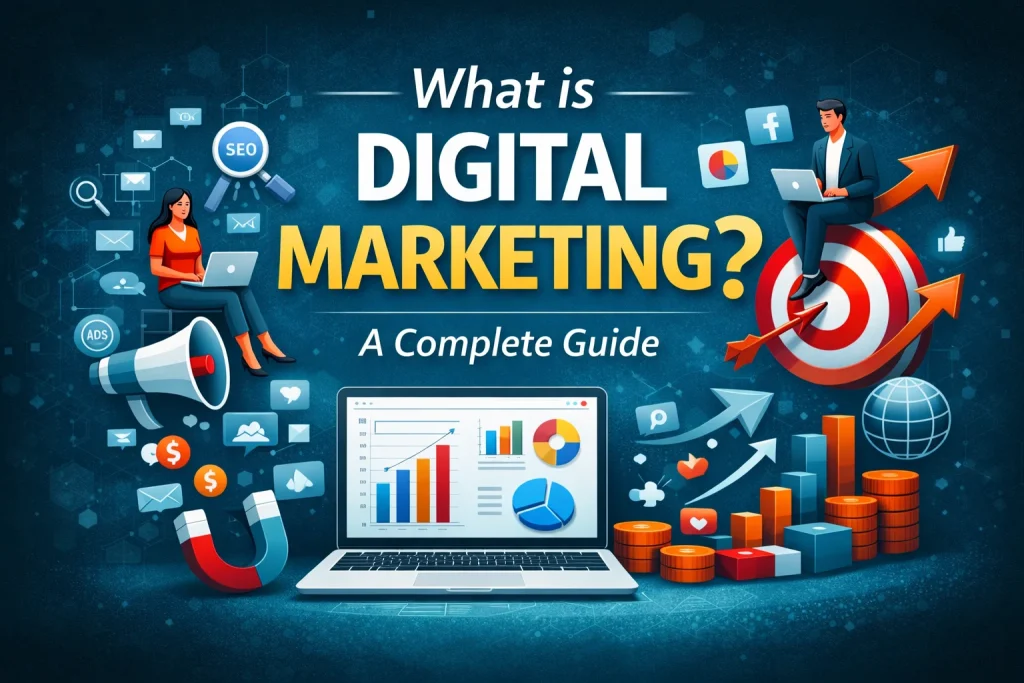
It’s not one skill—it’s a system made up of multiple moving parts working together. These include search engines, social media platforms, paid advertising, email marketing, content marketing, and websites or landing pages.
A skilled digital marketer doesn’t treat these channels separately. They connect them into a single growth system. If your website gets traffic but no sales, your digital marketing strategy is broken somewhere.
What Does a Digital Marketer Do?
Most people reduce digital marketing to posting on social media or running ads. That’s surface-level thinking.
A real digital marketer focuses first on generating traffic through multiple channels such as SEO, paid ads, social media campaigns, and email marketing. But bringing traffic is only the starting point.
They also define and understand the audience. Instead of targeting everyone, they analyze buyer personas, identify pain points, and align content with search intent. This is where most beginners fail—they chase visibility without understanding who they are targeting.
Conversion optimization is another core responsibility. A good marketer ensures that landing pages, call-to-actions, and funnel structures are designed to turn visitors into leads or customers. Traffic without conversion is just wasted effort.
Beyond execution, they rely heavily on data. Metrics like click-through rate, bounce rate, conversion rate, and return on investment are constantly tracked and analyzed. Without data, decisions become guesswork—and guesswork doesn’t scale.
Finally, they plan and execute campaigns such as product launches, lead generation funnels, and retargeting strategies. Everything is intentional and performance-driven.
What Is an SEO Specialist?
An SEO specialist focuses specifically on improving a website’s visibility on search engines like Google. But if you think SEO is just about ranking keywords, you’re stuck in outdated thinking.
Modern SEO is driven by search intent, user experience, authority, content quality, and technical performance. Google no longer rewards shortcuts or tricks. It rewards relevance and trust.
What Does an SEO Specialist Do?
The role of an SEO specialist goes far beyond writing blog posts.
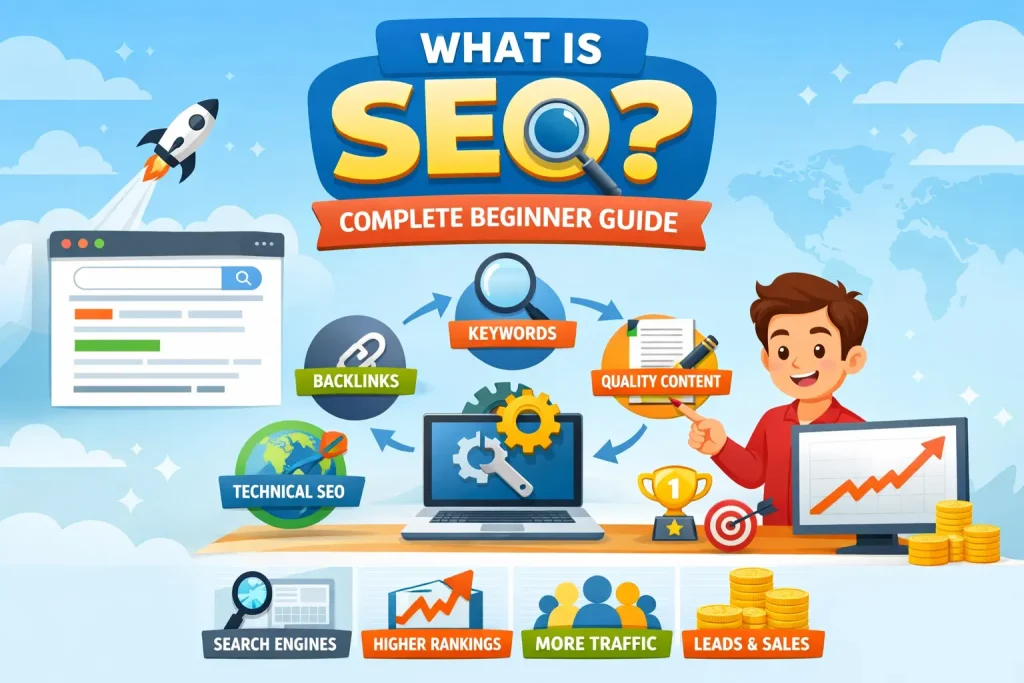
They start with keyword research, but not in a random way. Instead of chasing high-volume keywords blindly, they analyze search intent, competition level, and ranking difficulty. Choosing the wrong keyword can waste months of effort with no results.
They then move to On-page optimization, ensuring that every element of a page is structured correctly. This includes title tags, meta descriptions, header hierarchy, keyword placement, and internal linking. Poor structure reduces both user experience and search engine trust.
Technical SEO is another major responsibility that many people underestimate. It involves improving website speed, ensuring mobile responsiveness, fixing crawlability issues, and optimizing Core Web Vitals. Even great content won’t rank if the website itself is technically weak.
Content strategy is also part of their role. Instead of publishing random blogs, they build structured topic clusters and pillar content that strengthen overall site authority.
Link building remains a critical factor. High-quality backlinks signal trust to search engines, while low-quality links can damage rankings. Authority plays a major role in SEO success.
Finally, they track performance continuously. Rankings, traffic, user behavior, and conversions are monitored and adjusted over time. SEO without tracking is just blind content creation.
Digital Marketing vs SEO Specialist
This is where most people get confused.
A digital marketer focuses on overall online growth, covering multiple channels and strategies. An SEO specialist focuses specifically on organic search traffic and visibility.
However, the most effective professionals don’t limit themselves to one area. They combine both skill sets. If you only understand SEO, you may generate traffic but struggle with conversions. If you only rely on paid ads, you may see short-term results but lack long-term sustainability.
Real growth comes from integrating both.
Important Digital Marketing & SEO Specialist Skills
To compete in this field, certain skills are non-negotiable.
A strong foundation in keyword research and search intent analysis is essential. Content writing must be strategic and SEO-focused, not generic or filler-based. On-page and technical SEO knowledge is critical for proper execution.
Data analysis plays a central role, requiring familiarity with tools like Google Analytics and Search Console. Conversion rate optimization ensures that traffic actually turns into measurable results.
Technical understanding also matters. Basic knowledge of HTML, website structure, and page speed optimization gives a significant advantage. Working with platforms like WordPress and Elementor is expected, along with experience using tools such as Ahrefs, SEMrush, or Ubersuggest.
Marketing skills like copywriting, funnel building, and audience psychology directly impact results. Understanding paid advertising platforms adds another layer of effectiveness.
Soft skills are often ignored but equally important. Analytical thinking, problem-solving ability, patience, and adaptability are essential because the digital landscape changes constantly.

Tools Used by Digital Marketing & SEO Specialists
Professionals in this field rely on tools to improve efficiency and accuracy.
Google Analytics is used to track traffic and user behavior, while Google Search Console helps monitor indexing and SEO performance. Tools like Ahrefs and SEMrush assist with keyword research and backlink analysis. Screaming Frog is commonly used for technical audits, and Canva helps create visual content.
However, tools alone don’t guarantee success. Strategy and execution matter far more.
Why Businesses Need Digital Marketing & SEO Specialists
Without skilled professionals, most businesses waste resources.
They often spend money on ads without proper targeting, attract the wrong audience, or operate with poorly structured websites. Even when they get traffic, they fail to convert it into revenue.
A capable digital marketing & SEO specialist solves these problems by improving rankings, generating consistent leads, building authority, and creating sustainable growth.
Common Mistakes Beginners Make
Most beginners fail for predictable reasons.
They chase trends instead of mastering fundamentals. They ignore search intent and focus only on keywords. Many still rely on outdated tactics like keyword stuffing, which harms rankings rather than improving them.
Technical SEO is often neglected, even though it directly affects performance. Another major mistake is expecting fast results. SEO takes time, and unrealistic expectations lead to frustration or quitting early.
How to Become a Digital Marketing & SEO Specialist
There’s no shortcut here.
Start by understanding the fundamentals of SEO, marketing funnels, and user intent. Then apply what you learn by building and optimizing your own website. Practical experience matters more than theoretical knowledge.
Work on real SEO tasks such as writing optimized content, improving page structure, and tracking performance. Learn how to use industry tools through hands-on practice, not just tutorials.
Most importantly, create case studies. Real results are what differentiate you from the majority of candidates in this field.
Digital Marketer & SEO Specialist Salary:
The salary of a digital marketer and SEO specialist depends heavily on skill level, results delivered, and market demand—not just experience. In India, beginners typically earn between ₹2.5–5 LPA, but this range is misleading because most entry-level candidates lack real, measurable skills. Professionals who can actually drive traffic, improve rankings, and generate conversions quickly move into the ₹6–12 LPA range within a few years. High-performing specialists—especially those with expertise in SEO strategy, paid ads, and conversion optimization—can earn ₹15 LPA or more, or significantly higher as freelancers and consultants.
The job outlook is strong, but not easy. Demand is growing because every business wants online visibility, yet the market is saturated with underqualified candidates. This creates a gap: companies are not looking for “certificate holders,” they want problem solvers who can deliver ROI. Roles are expanding beyond traditional SEO into areas like performance marketing, content strategy, and analytics.
However, this is not a passive career path. Algorithms change, competition increases, and outdated tactics stop working fast. Those who continuously adapt, build real-world experience, and focus on results will find long-term stability and high income potential. Everyone else gets stuck at average salaries or replaced.
Final Thoughts
A digital marketing & SEO specialist is not just someone who writes content or manages ads.
They are responsible for driving traffic, converting users, and scaling business growth. This is a performance-based role where results matter more than effort.
If you treat it as a simple skill, you will struggle. If you treat it as a system and focus on outcomes, you build a career that is both stable and highly valuable.
Frequently Asked Questions (FAQs)
- What does a digital marketing & SEO specialist actually do?
A digital marketing & SEO specialist is responsible for increasing a website’s visibility, driving targeted traffic, and improving conversions using strategies like SEO, content marketing, paid ads, and data analysis. - Is SEO a part of digital marketing or a separate skill?
SEO is a core part of digital marketing, but it is also a specialized field on its own. While digital marketing covers multiple channels, SEO focuses specifically on organic search traffic and rankings. - How long does it take to see results in SEO?
SEO is a long-term strategy. In most cases, it takes 3 to 6 months to see noticeable improvements, and consistent effort is required to achieve stable rankings and traffic. - What skills are required to become a digital marketing & SEO specialist?
Key skills include keyword research, content writing, on-page and technical SEO, data analysis, and a basic understanding of marketing funnels and user behavior. - Is digital marketing and SEO a good career option in 2026?
Yes, but only if you focus on real skills and results. The demand is high, but competition is also growing. Those who can deliver measurable outcomes will have strong career growth and income potential.