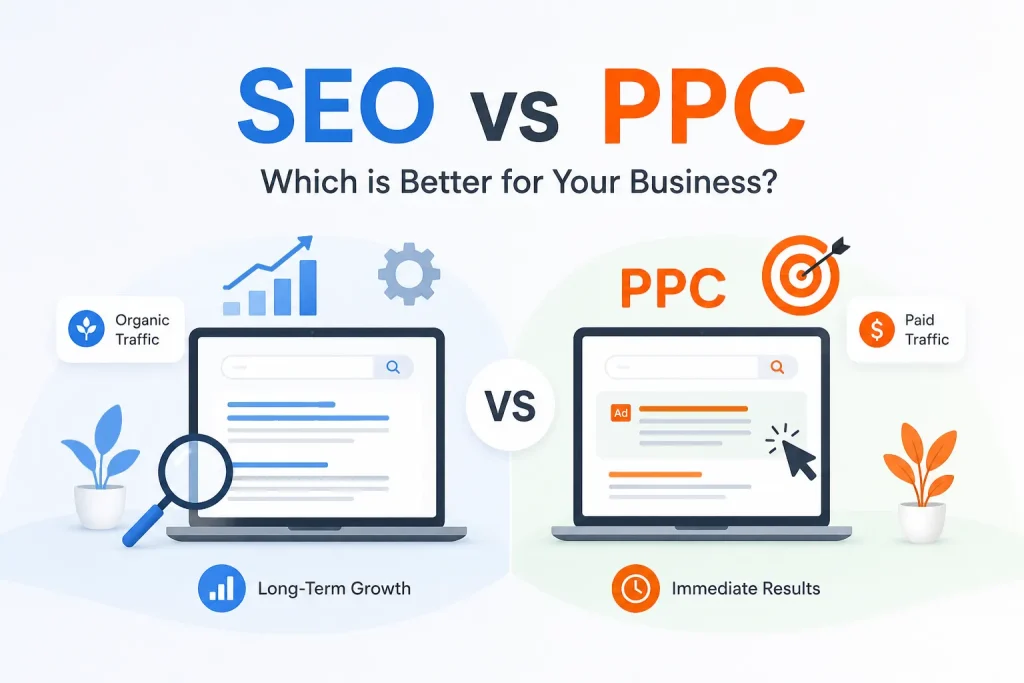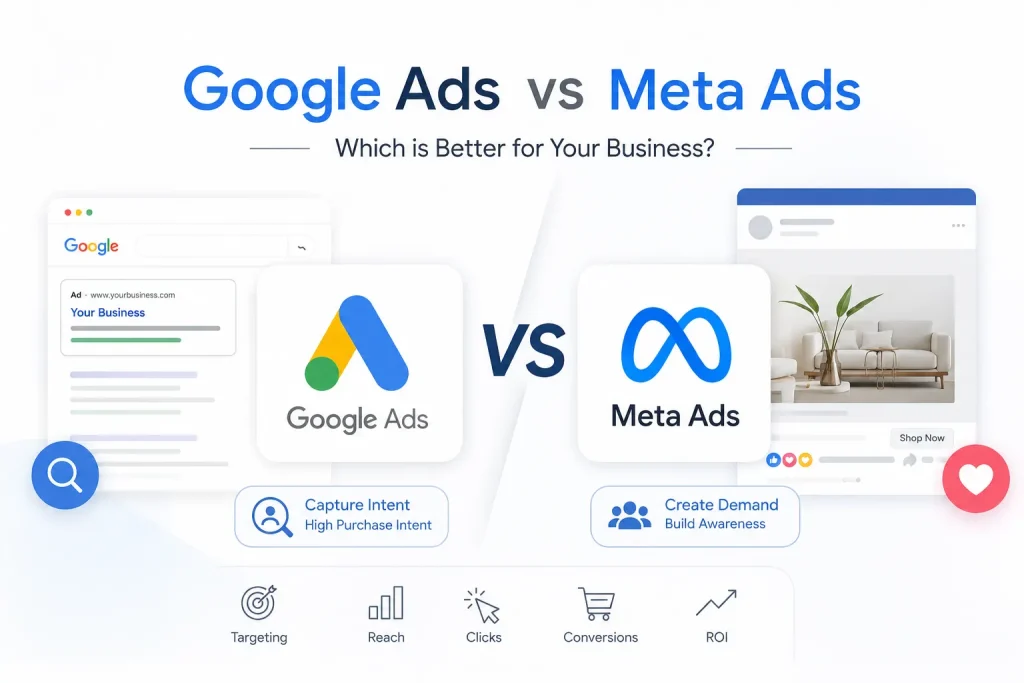
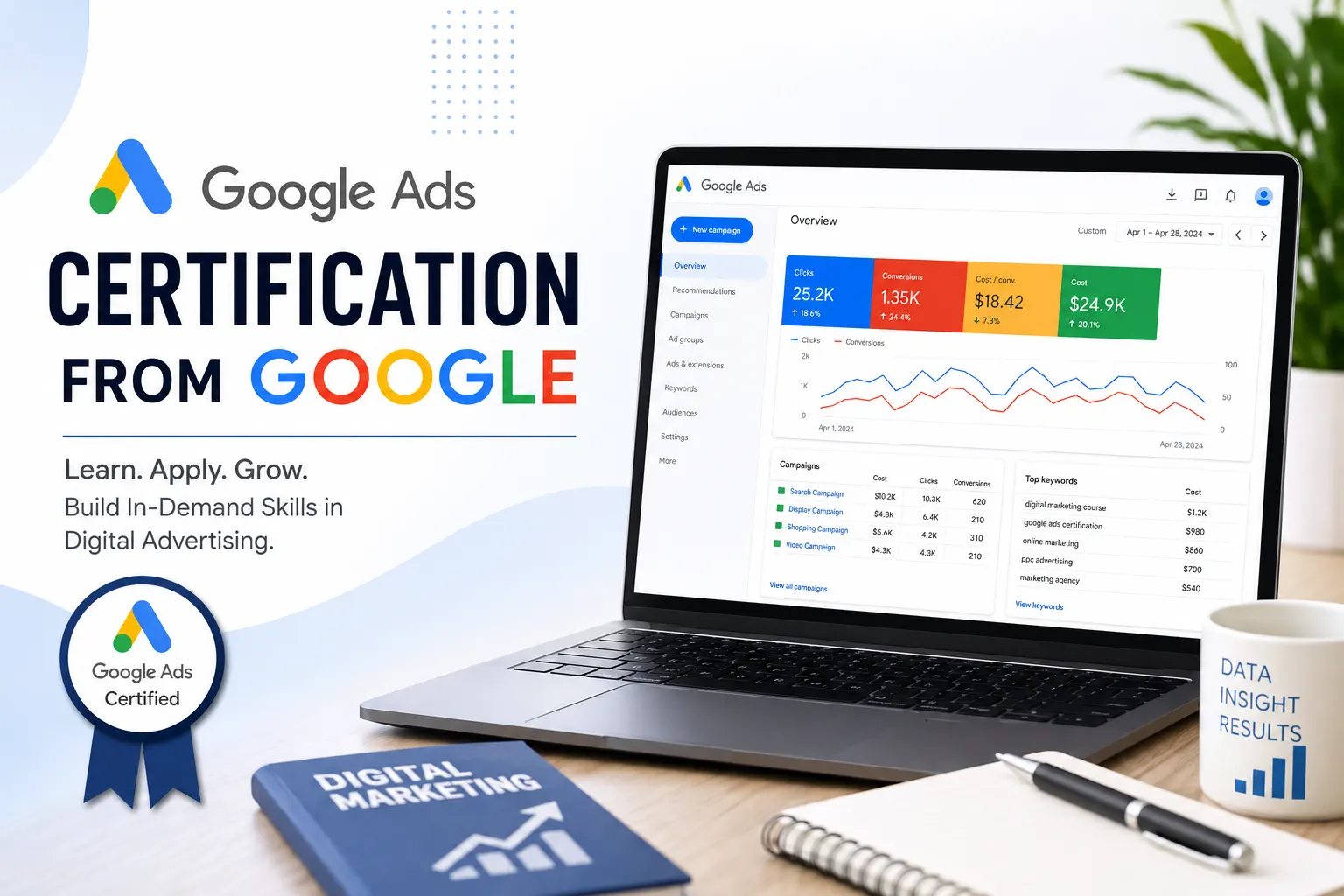
To strengthen my practical understanding of paid advertising and performance marketing, I recently completed the Google Ads Certification from Google. This certification helped me understand how online advertising campaigns are planned, optimized, measured, and improved to achieve business goals. More importantly, it provided me with practical knowledge that can be applied in real world digital marketing projects.
In this blog, I will explain what I learned through the Google Ads Certification from Google, how it improved my understanding of digital advertising, and how this certification helped me build practical skills that are valuable in real business environments.
Understanding Google Ads and Its Importance
Google Ads is Google’s online advertising platform where businesses can create ads that appear on Google Search, YouTube, websites, mobile apps, and other Google partner platforms. Companies use Google Ads to target users based on search intent, interests, demographics, location, and behavior. Among all advertising platforms, Google Ads remains one of the most powerful tools for businesses because it allows brands to reach users exactly when they are searching for products or services online.
The biggest advantage of Google Ads is intent-based marketing. Unlike traditional advertising, Google Ads allows businesses to reach users who are already searching for specific products or services. This increases the chances of conversions because the audience already has interest or buying intent.
Before completing the certification, I had a basic understanding of digital advertising. However, the course helped me understand how Google Ads works strategically, not just technically. I learned how businesses use paid advertising to solve specific problems such as generating leads, increasing online sales, improving local visibility, or building brand awareness.
What You Learn From Google Ads Certification from Google?
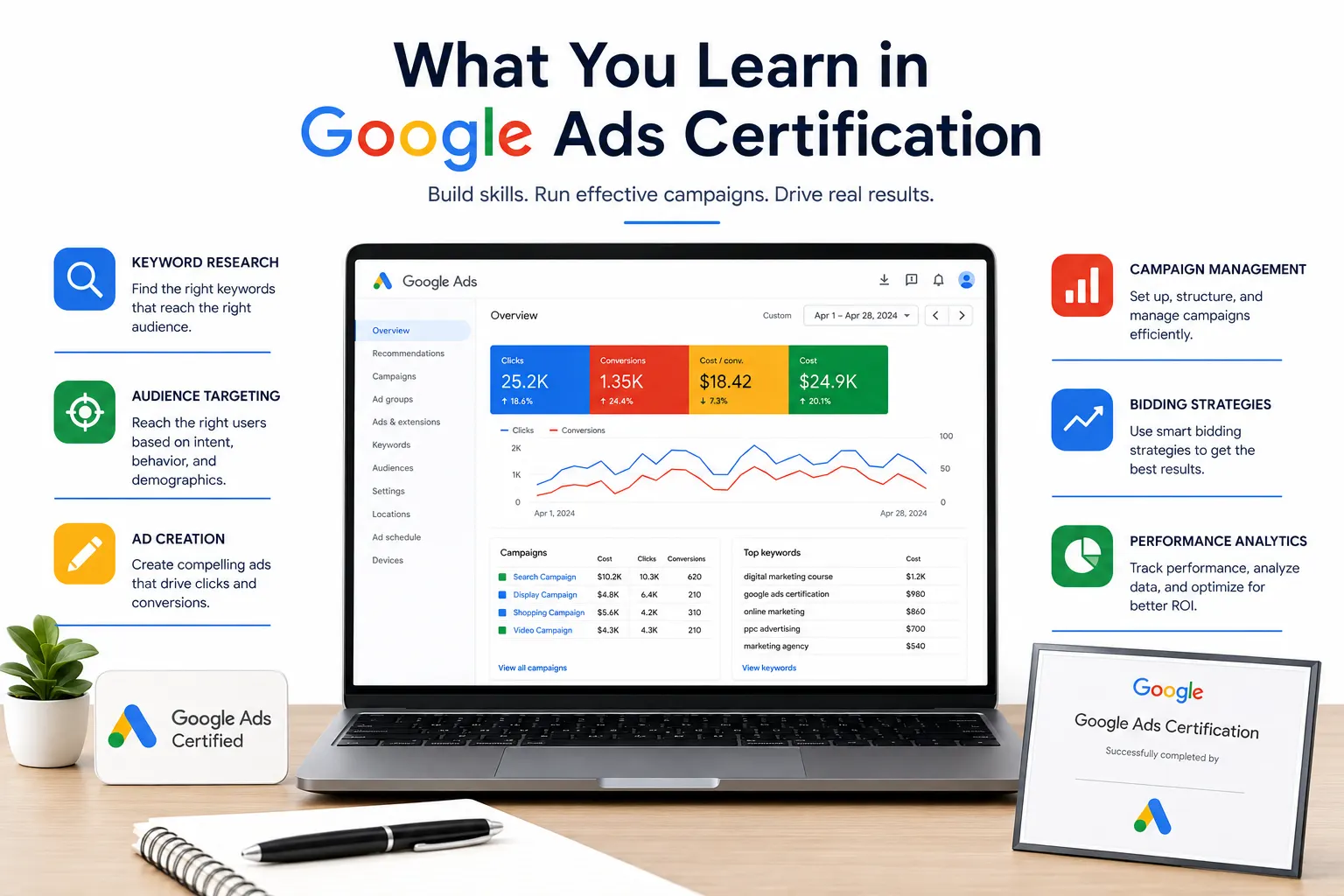
The Google Ads Certification from Google is designed to teach both foundational and advanced advertising concepts. The learning process focuses on campaign planning, audience targeting, bidding strategies, ad optimization, performance analysis, and conversion tracking.
One of the most important things I learned is that successful advertising is not simply about spending money on ads. Effective campaigns require proper audience research, keyword selection, compelling ad copy, structured campaign setup, and continuous optimization.
The certification introduced me to different campaign types available in Google Ads, including Search Campaigns, Display Campaigns, Video Campaigns, Shopping Campaigns, and Performance Max Campaigns. Understanding the purpose of each campaign type helped me realize how businesses select advertising strategies based on their goals.
Search campaigns are ideal for targeting users actively searching on Google. Display campaigns help businesses increase visibility through banner ads across websites. Video campaigns focus on YouTube advertising, while Shopping campaigns are mainly used by eCommerce businesses to showcase products directly in search results.
Learning these campaign structures gave me a broader understanding of how businesses approach digital advertising across different stages of the customer journey. Because Digital marketing is no longer limited to social media posting or basic website promotion. Businesses today depend heavily on paid advertising to generate leads, sales, website traffic, and brand visibility.
Keyword Research and Search Intent
One of the most valuable topics covered during the certification was keyword research and search intent analysis. Keywords are the foundation of Google Search advertising because they determine when ads appear to users.
I learned how to identify high-intent keywords that are more likely to generate conversions instead of simply focusing on high search volume. The certification explained the importance of understanding user intent behind searches and matching ads accordingly.
For example, a user searching “buy running shoes online” has stronger purchase intent compared to someone searching “best running shoes.” Understanding this difference is important because it directly affects campaign strategy, bidding, and conversion performance.
The certification also helped me understand keyword match types such as broad match, phrase match, and exact match. Learning how match types impact traffic quality and budget efficiency improved my understanding of campaign targeting and audience control.
Negative keywords were another important concept I learned. They help advertisers prevent ads from appearing in irrelevant searches, reducing wasted ad spend and improving campaign performance.
This knowledge is extremely valuable in real-world marketing because businesses want maximum return on investment from their advertising budget.
Campaign Structure and Ad Optimization
Another important lesson from the Google Ads Certification from Google was campaign organization and optimization.
A well-structured campaign improves ad relevance, quality score, and performance. I learned how campaigns are divided into ad groups and how proper segmentation helps improve targeting accuracy.
The certification also focused heavily on ad copywriting. Writing effective ad headlines and descriptions requires understanding customer pain points, search intent, and call-to-action strategies.
I learned that strong advertisements are not created randomly. Successful ads must be clear, relevant, persuasive, and aligned with user intent. Google also rewards relevant ads with better quality scores, which can reduce advertising costs and improve ad positioning.
The course explained how ad extensions improve visibility and click-through rates. Features like sitelinks, callouts, structured snippets, and call extensions provide additional information to users and increase the effectiveness of ads.
Understanding ad optimization gave me practical insight into how advertisers improve campaign performance through testing and continuous refinement.
Understanding Bidding Strategies and Budget Management
Before completing the certification, bidding strategies seemed complicated. However, the course simplified how Google Ads bidding works and how businesses manage advertising budgets effectively.
I learned about manual bidding and automated bidding strategies such as Maximize Clicks, Maximize Conversions, Target CPA, and Target ROAS.
The certification explained that bidding strategies should align with business goals. For example, an eCommerce business focused on sales may prioritize return on ad spend, while a local service business may focus on lead generation.
Budget management was another important learning area. Running successful campaigns is not about spending the highest amount of money. Instead, advertisers must allocate budgets strategically to achieve the best possible results.
This helped me understand the importance of performance monitoring and data-driven decision-making in digital advertising.
Performance Tracking and Analytics
One of the strongest aspects of the Google Ads Certification from Google was learning how campaign performance is measured.
Advertising without tracking is ineffective because marketers need accurate data to evaluate results and improve campaigns.
The certification introduced important metrics such as impressions, clicks, click-through rate, conversion rate, cost per click, cost per acquisition, and return on ad spend.
I learned how these metrics help businesses analyze whether campaigns are achieving their objectives.
The course also highlighted the importance of conversion tracking. Businesses need to know whether users are completing valuable actions such as purchases, form submissions, calls, or sign-ups after clicking advertisements.
This section improved my analytical thinking because successful digital marketing depends heavily on interpreting data correctly and making optimization decisions based on performance insights.
Real Life Benefits of the Google Ads Certification from Google
Completing the Google Ads Certification from Google provided more than theoretical knowledge. It changed how I approach digital marketing strategies and campaign planning.
One of the biggest improvements was understanding how businesses use paid advertising to generate measurable results. I now understand how targeting, bidding, optimization, and analytics work together to influence campaign performance.
The certification also improved my confidence while working on digital marketing projects. Earlier, my understanding of Google Ads was mostly surface level. After completing the certification, I became more comfortable discussing campaign structures, keyword targeting, conversion strategies, and advertising performance.
Another major benefit was learning how to think from a business perspective. Every campaign should support business goals such as lead generation, sales growth, website traffic, or brand awareness. This mindset is extremely important for anyone planning to work professionally in digital marketing.
The practical concepts from the certification also helped me understand how advertisers reduce wasted spending and improve marketing efficiency through optimization techniques.
How This Certification Helps in Career Growth
The digital marketing industry is highly competitive, and recruiters often look for candidates who possess both practical skills and industry-recognized certifications.
The Google Ads Certification from Google demonstrates that I have foundational knowledge of online advertising and understand how Google’s advertising ecosystem works.
Recruiters and employers value certifications because they show commitment to continuous learning and professional development. However, certifications alone are not enough. The real value comes from understanding how to apply those concepts in practical scenarios.
This certification strengthened my ability to work on PPC campaigns, analyze advertising data, understand audience targeting, and improve campaign performance.
It also supports my broader digital marketing learning journey alongside SEO, analytics, and content marketing. Paid advertising and organic marketing often work together, and understanding both areas provides a more complete marketing perspective.
Challenges I Faced During Learning
The certification process was not completely easy. Some topics, especially bidding strategies, campaign optimization, and analytics interpretation, required deeper understanding and repeated practice.
Google Ads contains many technical features, and understanding how different campaign settings affect performance takes time. Initially, it was difficult to understand how bidding models influence campaign results.
However, reviewing practical examples and learning the reasoning behind campaign decisions helped me improve my understanding gradually.
This experience taught me that digital marketing is not only creative but also highly analytical. Successful marketers must combine strategic thinking, audience understanding, data analysis, and problem-solving skills.
Final Thoughts
Completing the Google Ads Certification from Google was an important step in improving my digital marketing knowledge and practical advertising skills.
The certification helped me understand how businesses use Google Ads to reach target audiences, generate leads, increase conversions, and improve marketing performance. More importantly, it gave me a structured understanding of campaign planning, keyword research, ad optimization, bidding strategies, and analytics.
This learning experience also showed me that successful advertising requires continuous testing, analysis, and improvement. Digital advertising is not based on assumptions. It depends on data-driven decisions and strategic execution.
For recruiters, this certification reflects my willingness to learn industry-relevant skills and develop practical expertise in digital marketing. It demonstrates that I understand the fundamentals of online advertising and can apply those concepts in real-world marketing projects.
As digital marketing continues evolving, learning platforms like Google Ads will remain valuable for marketers who want to build strong performance marketing skills and contribute effectively to business growth.